
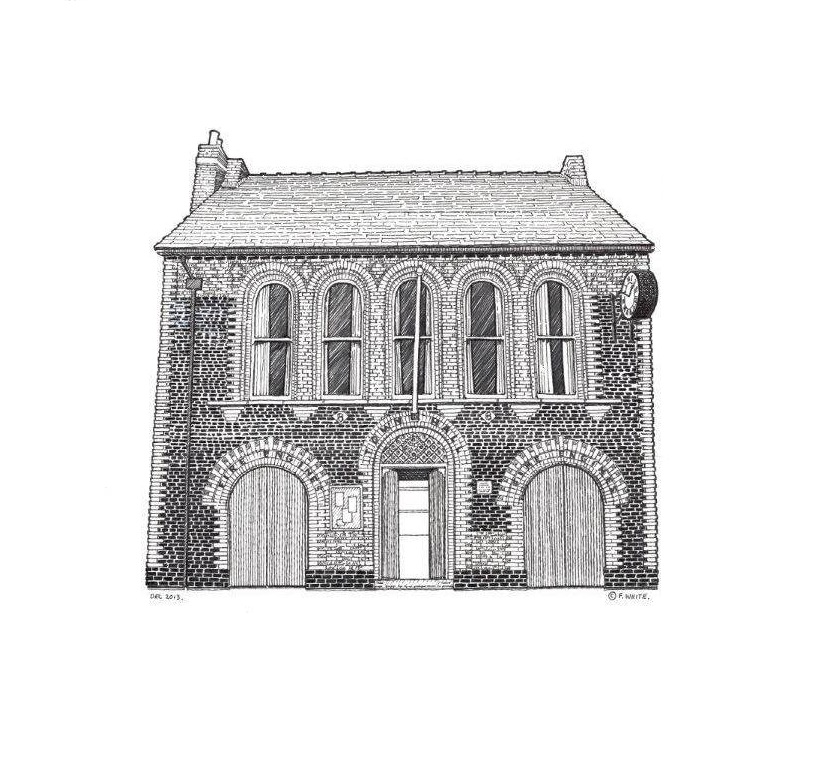
The Whittlesey Museum cares for a collection of more than 9,000 objects, including an extensive archive of photographs, documents, and a wide variety of other material. The collection reflects the history of Whittlesey and the surrounding communities of Coates, Eastrea, Pondersbridge, and Turves, all within the Fenland area.
Our collections explore many aspects of local history, including the experiences of local veterans, working and domestic life, and the area’s past from prehistoric times through the early medieval period.
As with many small museums, space is limited. The museum is housed in a former town hall and fire engine house, which means only a small proportion of the collection can be displayed at any one time. Our permanent displays include but not limited to:
The Straw Bear Festival
A display of costumes and memorabilia connected to the distinctive local heritage festival.
First and Second World Wars
Displays exploring local experiences of the two World Wars, using objects and personal stories to show life both at home and on the front line.
Prehistoric and Early Medieval Finds
Artefacts recovered from local archaeological excavations, offering insight into the area’s earliest inhabitants.
Agricultural and Industrial History
An outdoor display of agricultural and industrial machinery and its products, including bricks made locally, items from the former railway station, and a reconstructed workshop equipped with a wide range of tools.
Children’s Toys
A collection of toys and books donated by residents, reflecting childhood life and leisure in the area across different periods.
For those interested in items in our collection which are not on display, you are welcome to talk with our volunteer staff and submit a query. (You can also do this via our ‘contact us’ page.)
Currently, to be in accordance with our accreditation and in efforts to modernise the museum, we are undertaking the significant task of digitising our collection. With such a large archive of over 9000 items this will take much time but we hope this will improve the operation of running the museum and allow us to make the collection more accessible to the public.
FAQ
How do you decide which objects to put on display?
Items on display are carefully chosen to tell a story. This might relate to a particular period, the activities of an individual or group, or a specific theme. Some objects are selected because they are especially rare, closely linked to the museum’s aims, or particularly popular with visitors.
Items not currently on display are kept in storage. This may be because similar examples are already on display, or because certain objects require specialist care or conditions to ensure their long-term preservation. While we would like to display the whole collection, limited space means that choices must be made by our volunteer team.
Objects in storage are not permanently hidden from view. The museum hosts changing and seasonal displays, allowing items connected to special events or themes to be shown for a limited time. Please visit our events page to see what is on display this season.
Why do you keep items that aren’t on display?
It is our duty as a museum to care for all the items in our collection, and it would be a breach of the Museums Association Code of Ethics to sell, give away or destroy any item except under very special circumstances. When an item is deemed irrelevant to our museum or it is not in our abilities to correctly care for item, we are required to find another museum where the item would be displayed or adequately cared for. Although, it is very rare that we are required to do this. Even if an object spends most of the time in storage it can still be an important resource for study and provide historical information both now and in the future.
 Whittlesey Museum